Health · Buff Medical Resort
Detoxification and detox
A modern world, modern problems – and modern solutions.
“Why should I detoxify at all?”
Every day, our body processes and removes substances that arise in its own metabolism or are taken in from outside. At the same time, the modern world brings us into contact with substances that are particularly long-lived and are excreted only slowly.
Such substances include, for example, microplastics, PFAS, plasticisers, herbicides, pesticides, fungicides, a wide variety of chemicals and toxic metals such as aluminium, mercury or cadmium.
At Buff Medical Resort we therefore distinguish carefully: what is a normal exposure? What can usefully be examined? And when does a medical consequence follow from it?
“I have symptoms and wonder whether environmental factors play a role.”
Tiredness, difficulty concentrating or a drop in performance are not specific to a burden of pollutants. They can have numerous causes. Environmental factors should therefore be regarded as one possible part of a broader medical investigation.
“I would like to reduce exposures as early as possible.”
Almost everyone today is exposed to various environmental pollutants. What matters greatly is how well a person can cope with these substances and excrete them again. There are genetic and lifestyle-related factors that can have a major influence here.
“I am interested in blood cleansing.”
Therapeutic apheresis is a procedure intended to lower the body's burden of pollutants acutely, that is, where the natural detoxification pathways are not sufficient. Depending on the individual case, this can be a very sensible way to treat chronic inflammation and symptoms.
“Does every person carry environmental substances in the body?”
Many man-made substances are widespread and can be detected in a large part of the population. However, this does not mean that every person is “poisoned” or in need of treatment. What matters is the substance, the concentration, the duration of exposure and personal health.
100 blood samples were examined – ALL of them were contaminated with PFAS.
For the German Environmental Specimen Bank, researchers examined blood plasma samples from young adults in Germany. In 100 samples from the years 2009 to 2019, a total of 37 different PFAS were analysed.
The long-lived compounds PFOA and PFOS were detectable in every sample examined. Two further PFAS were found in 95 and 82 per cent of the samples respectively.
Source
Read the study →Among the 100 people examined, the proportion with detectable glyphosate rose from 12% (1993) to 70% (2016). The mean concentration increased from 0.024 to 0.314 µg/l – roughly a 13-fold increase.
Since 2015, the World Health Organization's International Agency for Research on Cancer (IARC) has classified glyphosate as “probably carcinogenic” (Group 2A) and points to DNA damage as well as associations with neurodegenerative diseases such as Alzheimer's or Parkinson's.
The use of glyphosate is severely restricted in 13 countries and banned entirely in 7 countries.
Source
Read the study →Between 2009 and 2017, excretion of the substitute plasticiser DINCH increased by around 10–68% per year, depending on the data set. For DEHTP the annual increase was approximately 100%. Age, sex, BMI and education did not explain the trend.
1,063 young men from Denmark and 878 young adults from Germany; repeated measurements up to 2017.
DEHTP and DINCH are plasticisers that are currently regarded as harmless. Even so, the rapid rise in blood concentrations is a matter of concern, because long-term consequences have not so far been investigated.
“We are living at a time when people are confronted with numerous new substances. The question of whether a person carries pollutants no longer arises today – the question is how high the burden is and how well the person can detoxify. Along the classic principle: “What goes in, what does it do in the body, how much comes out again?”
Dr. med. Claas Hohmann, Medical Director of Buff Medical Resort.
Why are pollutants actually harmful?
The body is a finely balanced system of biological, chemical and physical processes. Every cell, every substance and every mechanism has a particular task to perform, one that allows us to live healthily and as freely as possible.
Anything that is not an intended part of this system no longer contributes to optimal health – a disruptive factor arises.
Disruptive factors can also be substances that are in fact useful, but that are present in too large or too small a quantity. Substances that are foreign to the body or even toxic are particularly problematic. Some examples of disruptive pollutants:
Aluminium, mercury, lead, cadmium
Plasticisers such as bisphenols, phthalates, paraffins
Herbicides, pesticides, fungicides, insecticides
Solvents such as toluene, benzene, methanol, ethanol
PFAS, PFOS, PFOA
Excessively high LDL cholesterol levels
How the body processes and excretes substances
The body has a finely balanced system for processing metabolic products and many substances taken in from outside. Several organs take on different tasks in this.
Liver – the most important organ of detoxification
The liver chemically alters numerous substances, both those foreign to the body and its own. This allows them to be processed further or excreted via the bile and the kidneys. It thus forms a central interface between nutrition, metabolism and excretion.
Kidneys – filtering and excreting
The kidneys filter the blood continuously. Water-soluble substances and many metabolic products can then be excreted via the urine.
Gut – taking in and giving out
Certain substances and breakdown products reach the gut via the bile. Regular digestion supports their excretion. At the same time, the gut barrier influences which substances are taken into the body at all.
Lungs – releasing what can be breathed out
Through respiration, the body removes carbon dioxide and certain volatile substances. The lungs are therefore also part of the continuous exchange of substances.
Skin – relief through sweating
The skin complements these systems above all through its protective and temperature regulation. For most environmental substances, however, sweating is not a central or reliably controllable route of excretion.
What supports the natural systems
Everyone can take a few simple measures in everyday life to stimulate natural detoxification:
A diet that takes both nutrient supply and digestion into account
An adequate fluid intake suited to the individual
Regular movement and good blood flow
Good sleep and recovery
Reducing avoidable sources of pollutant intake (e.g. plastics, chemicals, pesticides, etc.)
Depending on genetics and the way life is organised, toxins can accumulate in the body despite these measures and lead to problems. Depending on the starting situation, it can therefore be sensible to support the body additionally.
Services at a glance

Medical consultation
The first step is always a thorough medical history and a discussion of your personal situation, in order to develop a sensible diagnostic and treatment plan.
Book a consultation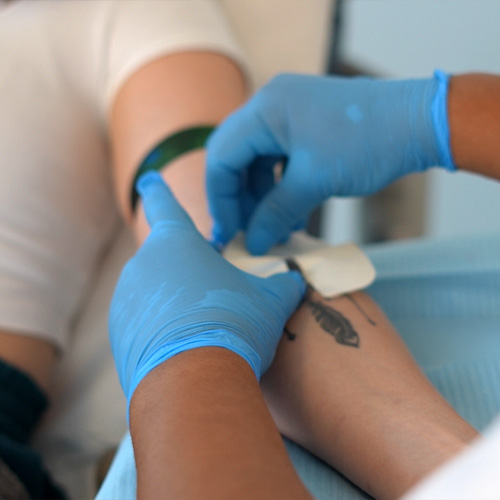
Laboratory diagnostics
For detoxification, genetics is particularly interesting – as are various parameters that show us how well the body can cope with toxins and whether it carries a high burden at all.
Book a consultation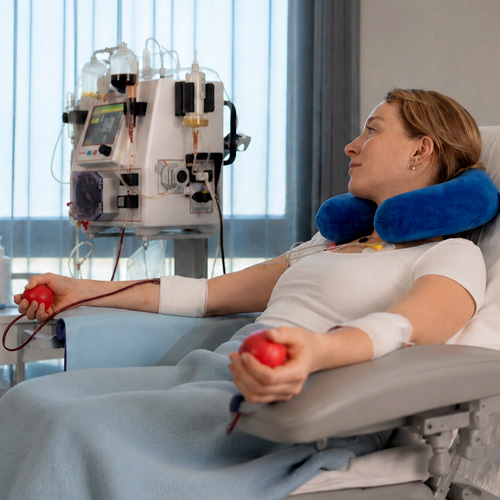
Apheresis (blood cleansing)
The task of therapeutic apheresis is to remove pollutants directly from the blood. This can relieve the body acutely.
More informationWhat is blood cleansing (apheresis)?
Therapeutic apheresis filters pollutants out of the blood, such as:
Heavy metals such as mercury and – depending on their chemical form and protein binding – lead and cadmium
Per- and polyfluoroalkyl substances (PFAS), in particular more strongly protein-bound representatives such as PFOS and PFOA
Polychlorinated biphenyls (PCBs)
Certain pesticides and other organochlorine compounds
Solvents and their constituents circulating in the blood
Mould toxins, that is, mycotoxins, in so far as they are present in the blood plasma
Certain medicines, drugs, plant toxins or other poisons in cases of severe acute poisoning
In addition, therapeutic apheresis also removes – depending on the procedure – substances produced by the body itself that can have harmful effects in certain diseases:
LDL cholesterol and lipoprotein(a)
Autoantibodies and pathological immunoglobulins
Immune complexes
Pro-inflammatory signalling substances
Coagulation proteins or pathologically altered plasma proteins
Begin with the right question.
Perhaps you have been in contact with certain environmental substances. Perhaps a finding already exists. Or you would like to know whether apheresis can sensibly be considered at all in your personal situation.
In a free initial conversation, with no obligation, our service team takes note of your concern and clarifies which information is already available. We discuss whether a stay, a medical assessment or further diagnostics may in principle be an option.
If there is a specific medical interest, the next step is a conversation with a physician. Only there are possible examinations, suitability and medical procedures assessed.
Related areas
Detoxification has many influences.
It makes sense not to look only at detoxification itself, but to stabilise the body as a whole – particularly when pollutants are mobilised from the body's tissues, a briefly increased burden can arise that should be viewed in the context of the whole body.
Gut and microbiome
An inflamed gut is especially permeable (leaky gut) and can be a strong source of pollutants that pass from food into the bloodstream.
Gut and microbiome →
Energy and metabolism
People who suffer from a detoxification disorder usually have a problem with their general energy balance – they may feel tired, weakened and listless.
Energy and metabolism →
Nutrition
Most pollutants are found in the food we eat. Sound information is of particular importance here.
Nutrition →
Reserve your stay at Buff Medical Resort and experience modern preventive medicine in a calm, sheltered atmosphere.
Book your stayWe will be glad to advise you personally on our health programmes and to plan your stay around your needs.


Holistic diagnostics and state-of-the-art procedures: At the heart of our medical work is the individual — and the precise analysis of their state of health. With specialized Cardio-MRI diagnostics for the early detection of cardiovascular risks, as well as cutting-edge imaging for brain health, we set the standard in preventive medicine. We also offer specialized treatments such as apheresis (blood purification) and chelation therapy to relieve and revitalize the body in a lasting way.
F.X. Mayr Cure & innovative cell regeneration: As a certified F.X. Mayr Prevent Center, we focus intensively on your gut health and metabolic balance. Our Longevity Cuisine and therapeutic fasting according to Dr. F.X. Mayr form the foundation for renewed vitality. What makes us truly unique is our concept of cell regeneration through simulated altitude: in our suites, you'll enjoy gentle altitude exposure that supports your mitochondrial health directly while you sleep.
An exclusive retreat for your health: Whether for targeted burnout prevention (BuffMed Vitality), enhancing athletic performance (BuffMed Sports), or a comprehensive health check (BuffMed Advanced) — our individually tailored health programs provide the ideal setting for a long and healthy life. Experience world-class medicine, yoga, and personal training in a prime lakeside location on Lake Constance.


.svg)