.png)
Brain health is not a romantic term in medicine. It is a precise field of research with clear findings on what promotes cognitive function and what impairs it.
Following our initial look at cognitive prevention, today we are diving deeper: What can you actually do? Which interventions are truly evidence-based? And what does brain health look like in practice at the Buff Medical Resort?

Neuroplasticity: the brain can change
The brain is not a rigid organ. It changes throughout life in response to internal and external stimuli. This ability is called neuroplasticity.
Neuroplasticity is not a phenomenon limited to youth. Studies show that the brain continues to form new synaptic connections and strengthen existing ones well into old age, provided the right conditions are met [1]. This is the biological foundation of every brain health intervention.
Proven ways to boost brain health and cognitive performance
The research is remarkably clear on this. Some of the most scientifically supported measures for promoting brain health include:
● Aerobic exercise: This increases BDNF (Brain-Derived Neurotrophic Factor), the primary growth factor for neurons. Regular endurance training is proven to improve memory, attention, and executive functions [2].
● Deep sleep: The glymphatic system only fully cleanses the brain during deep sleep. Quality sleep is the most effective neuroprotective measure that requires no prescription.
● Stress regulation: Chronically elevated cortisol damages the hippocampus, the brain's memory center. Targeted cortisol regulation is therefore directly neuroprotective.
● Nutrition: A Mediterranean diet high in omega-3 fatty acids, polyphenols, and micronutrients is associated with a reduced risk of dementia and better cognitive function [3].
● Cognitive and social stimulation: Mental challenges and social engagement strengthen cognitive reserve and delay cognitive decline in old age.
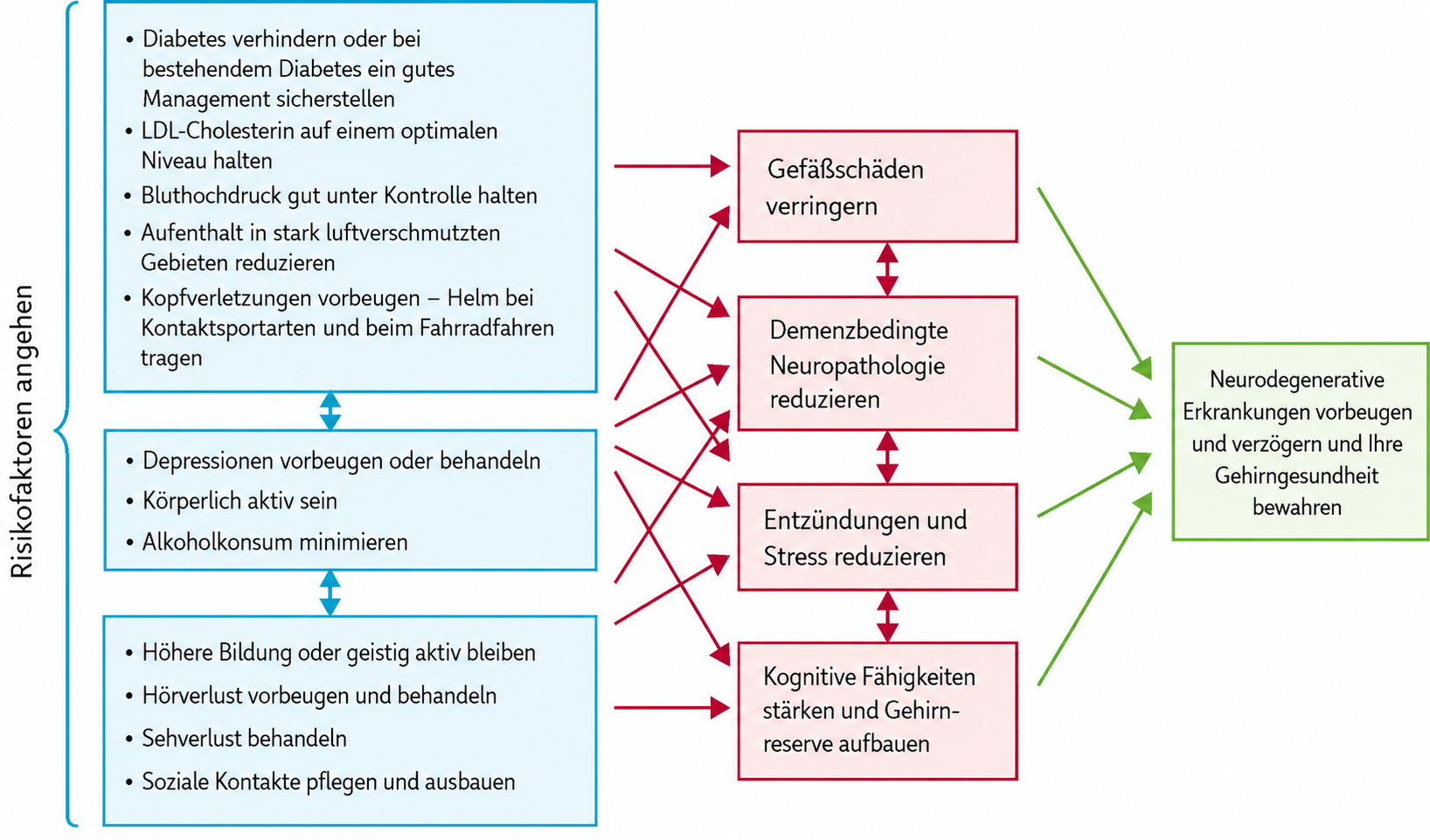
The graphic makes it clear: brain health is never the result of a single measure. Instead, various influencing factors work together—reducing vascular damage, inflammation, and neurodegenerative changes, while strengthening cognitive reserve and collectively helping to maintain mental performance well into old age.
Source: Lancet Neurology
What impairs cognitive function
At the same time, there are well-documented factors that actively impair cognitive function:
● Sleep deprivation: Even a single night of less than six hours of sleep impairs cognition.
● Vascular risk factors: High blood pressure, diabetes, obesity, high LDL levels, and arteriosclerosis damage cerebral blood flow.
● Systemic inflammation: Chronically elevated inflammatory markers correlate with accelerated cognitive decline.
● Micronutrient deficiency
Brain MRI and cognitive diagnostics at the Buff Medical Resort
At the Buff Medical Resort, we use high-resolution brain MRI to detect early structural changes in the brain, among other applications. Modern MRI techniques can provide indications of neurodegenerative processes years before clinical symptoms appear. By assessing regional brain volumes and characteristic atrophy patterns, we can distinguish age-related changes from pathological processes and purposefully plan individual prevention and diagnostic strategies.
Supplemented by medical history, neurological examination, and metabolic and vascular diagnostics, we create a comprehensive picture of cerebral health.
Building on this, we develop individual protocols: exercise programs, sleep optimization, nutritional guidance, stress regulation, and, where appropriate, specific micronutrient therapy.
When you understand your brain, you can strengthen it effectively. At the Buff Medical Resort, we provide the medical foundation to do just that.
FAQ
What is BDNF and why is it important for the brain?
BDNF (Brain-Derived Neurotrophic Factor) is a protein that promotes the growth, survival, and differentiation of neurons. It supports neuroplasticity and is crucial for memory and learning. Aerobic exercise is the most powerful known stimulus for BDNF release.
Which diet is good for the brain?
A Mediterranean diet rich in omega-3 fatty acids (fatty fish, walnuts, flaxseeds), polyphenols (berries, dark chocolate, olive oil), and micronutrients, along with a variety of vegetables and herbs, shows the strongest evidence for cognitive health. Sugar, trans fats, and a hypercaloric, nutrient-poor diet impair cognitive function.
What is a brain MRI and how does it work?
Magnetic resonance imaging (MRI) is a radiation-free imaging technique that uses a strong magnetic field and radio waves to create high-resolution images of the brain. It provides a detailed view of brain structure and offers valuable insights into neurological changes. At the same time, it establishes an objective baseline that allows for the reliable detection and assessment of changes over time.
Can you actively prevent cognitive decline?
Yes. Regular physical activity, high-quality sleep, stress management, a Mediterranean diet, and the control of (neuro)vascular risk factors all have proven neuroprotective effects. Early diagnosis provides the foundation for targeted, personalized interventions.
.jpg)





.svg)