What Cognitive Health Means
Cognitive health encompasses the brain's ability to process information, maintain attention, make decisions, regulate emotions, and adapt to new situations. It is not constant; it changes with age, lifestyle, sleep, stress levels, and a range of biological factors.
Cognitive reserve describes the brain's ability to respond flexibly to age-related or disease-related changes while continuing to function efficiently. It develops throughout life through learning, exercise, social interactions, and other stimulating experiences. Individuals with higher cognitive reserve can often live longer without noticeable cognitive impairments, even with existing brain changes.
Cognitive prevention aims to maintain the brain's adaptability and resilience for as long as possible. This includes, in particular, sufficient sleep, regular physical activity, social connection, continuous learning, stress regulation, and the early treatment of modifiable risk factors.

The glymphatic system: the brain's cleansing system
The glymphatic system is a specialized cleansing system of the brain that is primarily active during sleep. Through the flow of cerebrospinal fluid (CSF), metabolic waste products and potentially neurotoxic proteins are removed from brain tissue.
During sleep, the brain activates its own "cleansing system." This process removes metabolic waste products and potentially harmful proteins, including β-amyloid and tau, from the brain. Since the accumulation of these proteins is associated with diseases like Alzheimer's, healthy and sufficient sleep is now considered a crucial component in preventing and supporting brain health.
Early detectable risk factors for cognitive health
Cognitive health is not predetermined. Many of the most relevant risk factors are measurable and modifiable:
● Sleep deprivation and disrupted sleep architecture: Direct impact on glymphatic clearance
● Cardiovascular risk factors: High blood pressure, atherosclerosis, and diabetes significantly increase the risk of dementia [3]
● Chronic stress and dysregulation of the hypothalamic-pituitary-adrenal (HPA) axis: Long-term elevated cortisol levels are associated with structural and functional changes in the hippocampus, a brain region that plays a central role in learning, memory consolidation, and spatial orientation. Chronic stress can also promote neuroinflammation and impair neuronal plasticity.
● Lack of physical activity: Regular exercise stimulates neurotrophic factors like BDNF, which promote nerve cell growth
● Social isolation and lack of cognitive stimulation
All these factors are diagnostically assessable. And all of them can be positively influenced through targeted intervention.
BrainScan: Cognitive Diagnostics at Buff Medical Resort
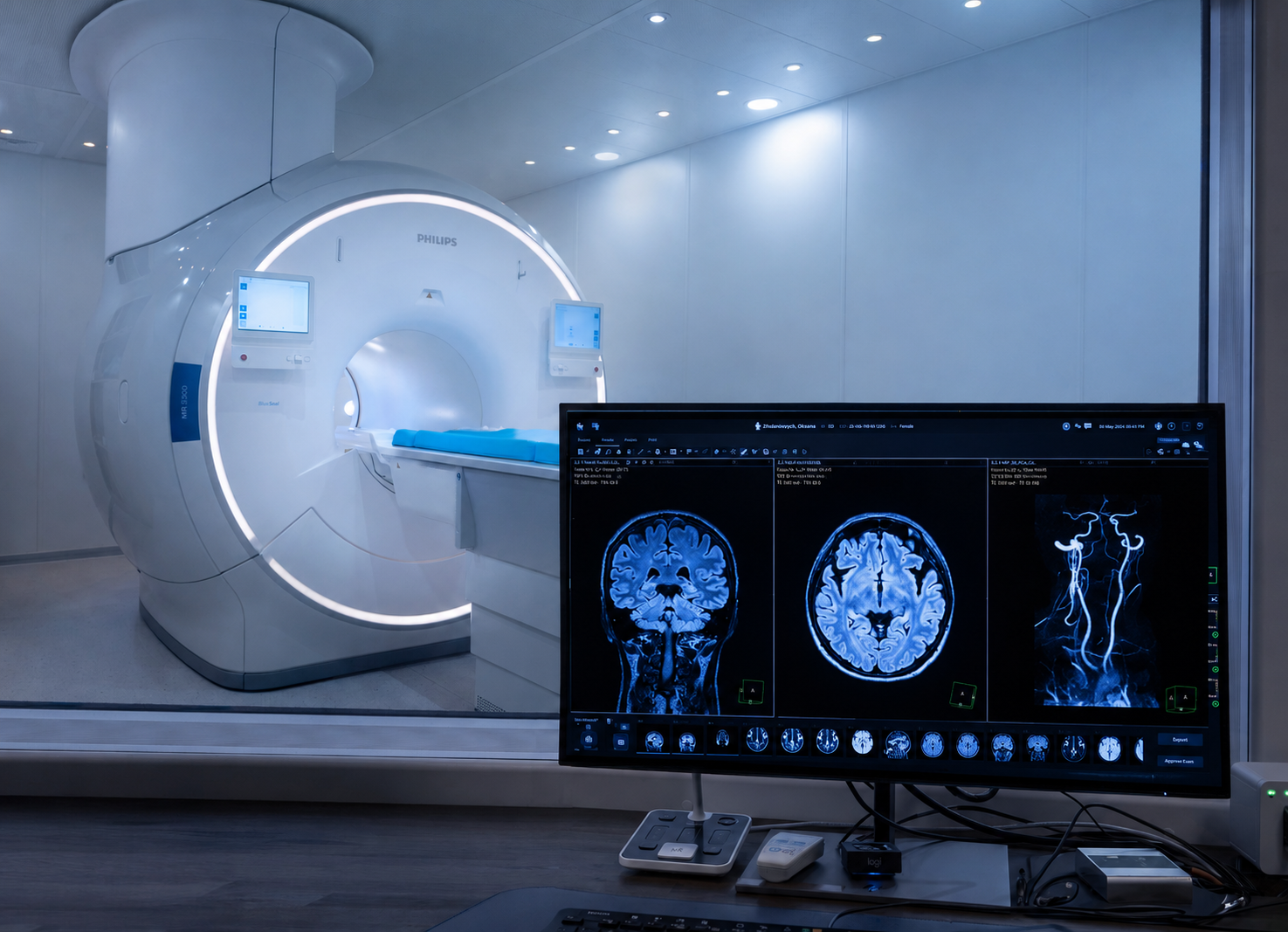
At Buff Medical Resort, we enhance our preventive diagnostics with modern brain MRI imaging. Using advanced analysis software, both the volume of gray and white matter can be quantitatively analyzed.
Certain patterns of regional brain atrophy are associated with various neurodegenerative diseases. If such changes are detected at an early stage – even before clinical symptoms appear – this opens up the possibility of initiating targeted preventive measures and supporting brain health long-term.
Furthermore, MRI provides important information about the presence of cerebral microangiopathy or Cerebral Small Vessel Disease (cSVD). These changes are associated with an increased risk of ischemic strokes, vascular cognitive impairments, and certain forms of dementia.
Imaging can also reveal other clinically relevant findings, including inflammatory changes, space-occupying lesions, cysts, vascular malformations, or intracranial aneurysms. The early detection of such changes is of great importance, as it enables timely referral to specialized centers and, in certain cases, can prevent serious or potentially life-threatening complications.
Brain MRI is therefore not solely for diagnosing existing diseases. Rather, it represents an important component of modern preventive medicine, allowing for the early detection of structural changes and relevant comorbidities.
Conclusion
Brain health is an essential component of healthy aging and deserves a firm place in modern preventive medicine.
The brain is the foundation of our memories, our personality, and our ability to connect with the world. Preserving its health is a central component of healthy aging.
Modern preventive medicine makes it possible to identify modifiable risk factors early and initiate targeted measures to support long-term brain health. This is because prevention doesn't just start with the onset of symptoms, but long before.
Learn more about how BrainScan and our holistic assessment can help you understand cognitive health as part of your longevity strategy.
FAQ
What is cognitive prevention?
Cognitive prevention refers to measures aimed at maintaining long-term brain health and reducing the risk of cognitive diseases. These include sleep optimization, stress management, cardiovascular prevention, targeted physical and mental activity, and precise diagnostics for the early detection of risk factors.
What is the glymphatic system and why is it important?
The glymphatic system is a network in the brain that flushes out metabolic waste products, including beta-amyloid and tau protein, during deep sleep. These molecules are associated with Alzheimer's when present in elevated concentrations. Chronic sleep deprivation directly impairs this cleansing process and increases the long-term risk of cognitive diseases.
What is BrainScan at Buff MedicalResort?
Brain MRI enhances preventive diagnostics with a detailed assessment of brain health and can detect structural changes early, even before they become clinically relevant.
Which lifestyle factors protect brain health?
Regular deep sleep to activate the glymphatic system, aerobic exercise to promote BDNF (brain-derived neurotrophic factor), stress reduction to protect the hippocampus, cardiovascular health to ensure blood circulation, and social and cognitive activity to strengthen cognitive reserve are the most important proven protective factors.
.jpg)





.svg)